September is the moment Mauritius exhales. The tourist rush has not arrived yet. The prices are lower. The beaches are quieter. Iberojet flies you there from Madrid, non-stop, no layovers, no middle-of-the-night connections. You leave Spain, and eleven and a half hours later you are watching the Indian Ocean.
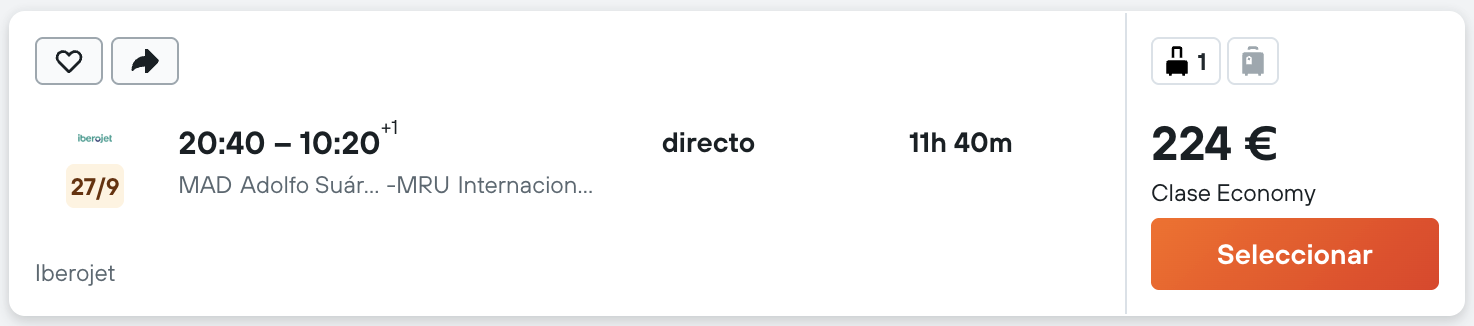
✈️ The Deal
- From: Madrid, Spain
- To: Port Louis, Mauritius
- Airline: Iberojet
- Stops: Non-stop
- Price: €224 one way
- When: September 2026
Example dates:
27/09/2026 – 11/10/2026
💰 How Far Does Your Money Go?
A dholl puri — Mauritius's street food staple — costs €0.50 from a roadside vendor. A cold Phoenix beer at a local bar: €2.15. A full rice-and-curry lunch at a local canteen: €5–€7. Roughly what a caña and a pincho cost you in Madrid on a good day. The beach resorts are not cheap. But eat where Mauritians eat and your money goes a long way.
☀️ The Weather
September is the tail end of Mauritian winter: 22–25°C, low humidity, almost no rain, and the Indian Ocean at 22°C. Madrid in September still runs at 28–30°C, beaches packed, terraces full. You land in Mauritius and the air is different — cooler, quieter, and entirely unhurried. One of the best months to visit the island.
🏨 Where to Stay
Mauritius spans guesthouses at the beach to some of the finest resort hotels in the Indian Ocean. Every budget has options.
Voile Bleue Boutique Hotel — 8.7/10 — From €80/night Beachfront in Pointe aux Biches, with an infinity pool and clean, simple rooms. The kind of place where you stop checking your phone after about six hours. 👉 Book here
C Mauritius — 8.9/10 — From €150/night Adults-only resort in Belle Mare with direct beach access, a spa, and watersports included. One of the most consistently well-reviewed mid-range hotels on the island. 👉 Book here
LUX Belle Mare Resort & Villas* — 9.1/10 — From €350/night Long stretches of white sand, multiple pools, and a beach bar that makes leaving feel unreasonable. One of the flagship resorts on the east coast. 👉 Book here
🎯 What to Do
Mauritius is equal parts beach and wilderness. Most visitors only see one half.
Île aux Cerfs Catamaran Cruise — A full day out to the island's most famous beach, with snorkelling, a BBQ lunch on board, and water that looks photoshopped until you're in it.
Swim with Dolphins at Crystal Rock — West coast excursion: spot wild spinner dolphins in the morning, then snorkel around Crystal Rock with Le Morne Mountain rising behind you.
Chamarel Seven Coloured Earth — A geopark in the southwest highlands where volcanic soil has settled into seven distinct bands of colour. Strange and genuinely worth the drive.
Blue Bay Marine Park — The best snorkelling on the island. A protected lagoon with 38 coral species, sea turtles, and water clear enough to read the bottom.
🗺️ Where to Go From Here
Mauritius sits in the middle of the Mascarene Islands. The neighbours are worth the detour.
Rodrigues Island — 1.5-hour flight from Mauritius. Smaller, quieter, almost no mass tourism. Hiking trails, deserted beaches, and the last genuinely unhurried corner of the Indian Ocean.
Réunion Island — Under 1 hour by plane. A French overseas territory built around an active volcano. Lava fields, cloud forests, and dramatic hiking that contrasts completely with Mauritius's beach pace.
Île aux Cerfs — Short boat from Trou-d'Eau-Douce on the east coast. The island's most photographed beach: white sand, calm lagoon, and a colour that doesn't make sense until you're standing in it.
Le Morne Peninsula — 45 minutes from the airport. A UNESCO World Heritage Site on the southwest tip, with kitesurfing, diving, and a mountain that makes every photo look like it was taken on a set.
A non-stop from Madrid to the Indian Ocean. Iberojet runs this route seasonally. September is dry, quiet, and the right time to go.
Get every flight deal we find, on your favourite app.
Pick how you want to hear from us — or all three. Free, no spam.